

New Study Finds Nearly a Third of People Secretly Access Their Partner’s Phone — Most Don’t Realize It Could Lead to Jail Time
The days of rifling through a partner’s diary are long gone. In 2025, curiosity has gone digital. According to a new study conducted Seattle law firm, Dellino Family Law Group, nearly one in three people (31%) admit to snooping through their partner’s phone, checking texts, scrolling through social media messages, or even searching dating apps.
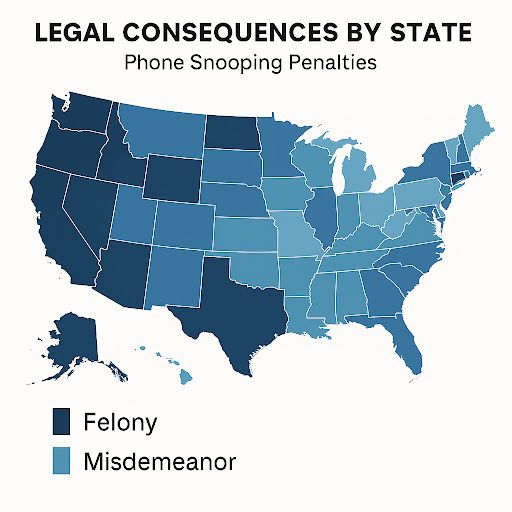
But what may feel like a harmless act of suspicion comes with significant fallout. Not only does snooping erode trust, but in many states, it can also carry criminal penalties ranging from hefty fines to prison sentences.
Key Findings From the Phone Snooping Study
-
31% of people admitted to snooping on a partner’s phone without permission.
-
100% of snoopers said they checked text messages, with social media, photos, and dating apps also popular targets.
-
67% reported negative consequences after being caught, including arguments, breakups, and a permanent loss of trust.
-
91% had no idea snooping could be illegal, with possible fines or jail time under federal and state laws.
-
44% of respondents have been cheated on, and they were four times more likely to snoop.
Trust on the Line
Among non-snoopers, trust in their partner’s digital habits averaged a near-perfect score of 10 out of 10. But those who admitted to snooping reported significantly lower trust levels, typically ranging from 4 to 7. Interestingly, even some who claimed high trust still snooped, often citing instinct or past experiences with betrayal.
Legal Blind Spot
The study revealed a striking knowledge gap: nine out of ten people had no idea that snooping could amount to a criminal offense. Under the Electronic Communications Privacy Act, unauthorized access to private communications can carry up to five years in prison and a $250,000 fine.
States often pile on their own penalties. In Virginia, snooping could be prosecuted as a felony with up to five years in jail. In Ohio, it can bring an 18-month sentence. And in Washington state, where privacy protections are especially strict, snooping may be classified as a felony under multiple statutes, with fines up to $10,000 and jail terms of five years.
Snooping in Divorce Court
Many snoopers say they’re motivated by suspicions of infidelity or financial dishonesty. But even if incriminating texts or photos are found, they’re rarely admissible in divorce proceedings. Courts often disregard illegally obtained evidence, and in some cases, presenting it can backfire, weakening a case and damaging credibility.
Dealbreakers Revealed
When asked what discoveries would justify ending a relationship, respondents cited:
-
Physical cheating
-
Secret dating app activity
-
Emotional cheating through intimate messages
-
Hidden financial behavior
Some respondents even considered the act of snooping itself to be a dealbreaker.
Safer Alternatives to Snooping
Instead of risking jail time and their relationship experts advise healthier, legal options for addressing suspicion, including:
-
Open communication and explicit consent to share devices
-
Monitoring public social media activity
-
Reviewing joint financial statements
-
Using consensual location-sharing apps
-
In serious cases, hiring a licensed private investigator or consulting an attorney
The Bottom Line
Phone snooping may seem like a quick fix to ease suspicion, but the risks — to both relationships and personal freedom — are steep. With trust scores plummeting after snooping and courts unlikely to accept secretly obtained evidence, curiosity often does more harm than good.
Comments are closed.