

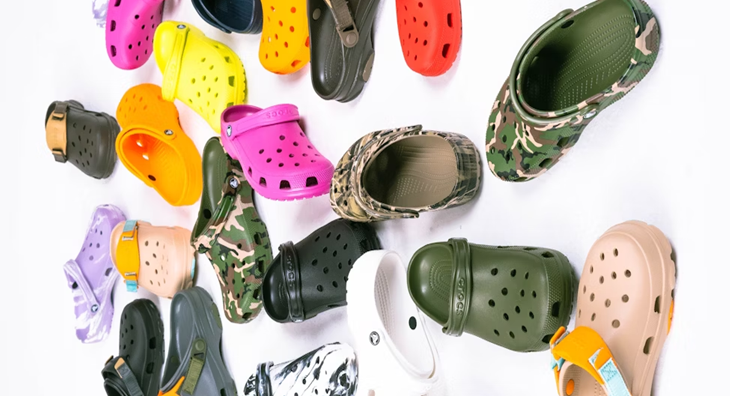
When it comes to children’s shoes, comfort and practicality usually come first. Parents want something their kids can throw on quickly, run around in, and—ideally—something that lasts more than one season. Over the last decade, Crocs have become a staple in many households. They’re colourful, easy to clean, and children love them. But beneath the fun designs and the ease of slipping them on, one question lingers: are Crocs actually good for children’s feet?
Why parents usually go for Crocs
There are obvious reasons why Crocs are so popular. For parents, they tick a lot of boxes: lightweight, washable, and tough enough to withstand playground scrapes or trips to the beach. For children, the appeal is even simpler. They’re fun. A pair of boy’s Crocs in bright blue or green can feel almost like a toy, especially when customised with the brand’s famous charms.
Then there’s the practical side. Young children are often reluctant to put on shoes with laces or fiddly straps, and Crocs solve that problem. Even a toddler can manage to get them on with minimal fuss. For school runs, garden play, or summer holidays, they’re a quick solution.
What podiatrists say
This is where the debate starts to get interesting. Many podiatrists agree that Crocs have their place, but they’re not designed to be an all-day, every-day shoe for children. The main concern is that Crocs don’t provide the same level of support as a good pair of trainers or properly fitted shoes.
Children’s feet are still developing, and the right support is crucial for healthy growth. The open heel design of Crocs means the foot can slip about, which might encourage children to grip with their toes to keep the shoe in place. Over time, that can cause strain.
Another issue is arch support. While Crocs are cushioned, they don’t necessarily align the foot in a way that supports the arch and heel, especially if a child wears them for long periods. Podiatrists often recommend reserving Crocs for short bursts of activity—like a trip to the swimming pool or a day at the beach—rather than hours of playground climbing and running.
Where Crocs really come into their own
That said, dismissing Crocs altogether would be unfair. They’re incredibly practical in certain situations. Around water, for instance, they’re far better than traditional sandals. They dry quickly, don’t slip easily on wet surfaces, and protect feet from sharp stones. On family holidays, they’re often more versatile than flip-flops, and for children who hate the feeling of sand between their toes, Crocs can be a blessing.
There’s also something to be said for encouraging independence. If your child can’t manage shoelaces yet, boy’s Crocs allow them to get ready without help, which can be a small but important boost to confidence.
How to use them wisely
The general advice from foot specialists is moderation. Crocs are fine, even beneficial, in the right settings. But they shouldn’t replace well-fitted shoes entirely. If your child is wearing Crocs for hours every day, especially during activities that involve lots of running and climbing, you may want to think twice.
Instead, consider using them as part of a rotation. Proper trainers for school and sport, Crocs for casual play in the garden, or for slipping on after swimming lessons. That way, your child gets the best of both worlds: the fun and ease of Crocs without missing out on the support of traditional footwear.
Choosing the right pair
If you do decide to buy Crocs, fit matters. Crocs come in a range of sizes, but because of their roomy design, it’s easy to pick a pair that’s too big. Oversized shoes only make slipping and toe-gripping worse. Make sure there’s a comfortable but not excessive amount of space at the front, and that the heel strap actually rests against the heel rather than dangling loosely.
It’s also worth keeping an eye on wear and tear. Crocs are hardy, but once the tread starts to wear down, they can become slippery on certain surfaces. Children are less likely to notice, so it’s up to parents to check.
The balance between fun and function
Ultimately, Crocs are a modern parenting compromise. They’re not the perfect shoe, but they solve a lot of everyday problems. Parents love them because they’re easy, children love them because they’re playful, and most experts agree they’re fine when used in moderation.
Think of Crocs as you might think of sweets: enjoyable, even useful in certain contexts, but not something to rely on exclusively. A well-fitted pair of trainers or school shoes should still form the backbone of your child’s footwear.
That said, a pair of boy’s Crocs has its place in almost any child’s wardrobe. For beach holidays, trips to the park, or simply running around the garden on a summer afternoon, they’re hard to beat. The key is not to expect them to do everything.
Comments are closed.